How to Know Your Hydration Status with a Urine Test
Why Urine Reflects Hydration
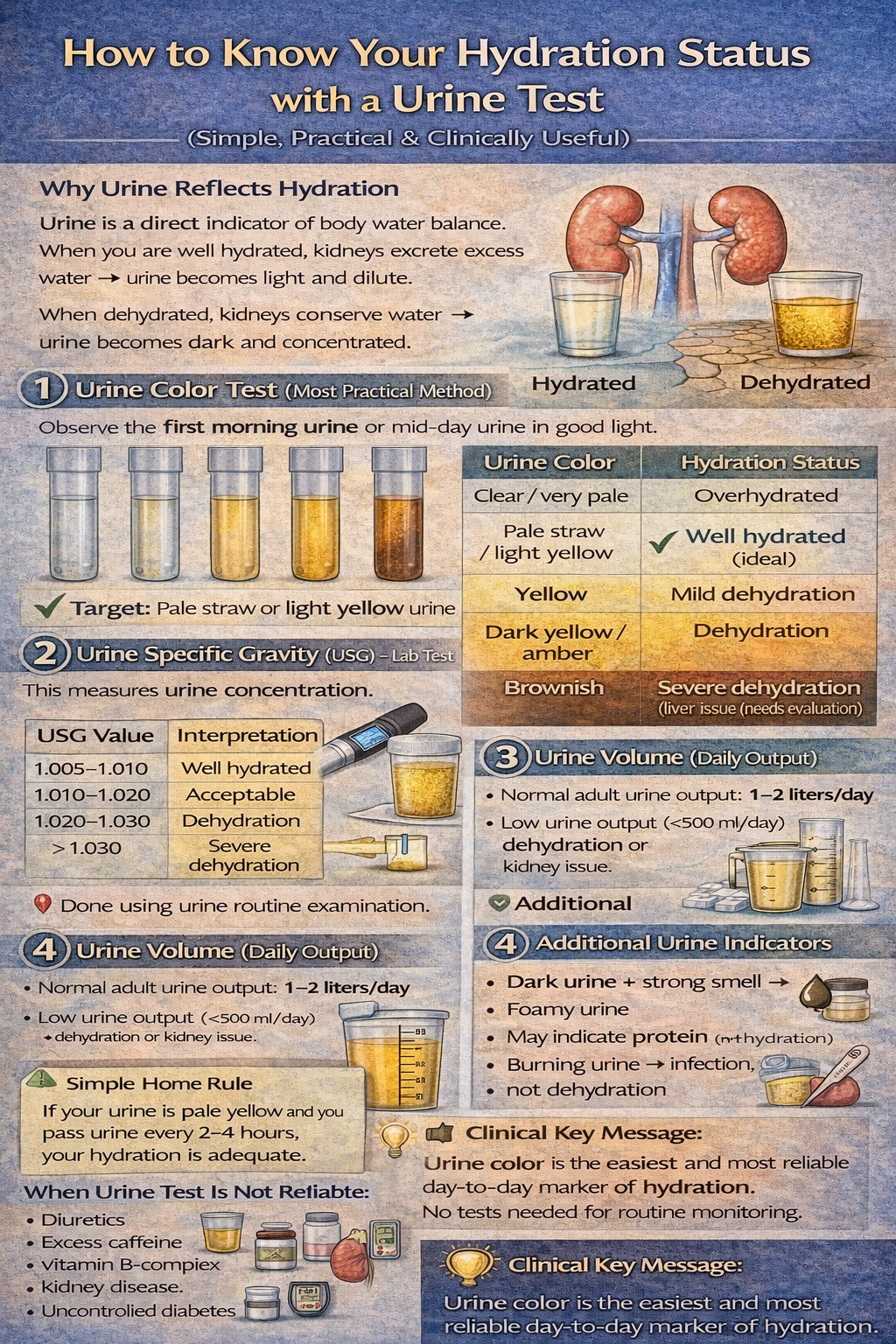
Urine is a direct indicator of body water balance. When you are well hydrated, kidneys excrete excess water → urine becomes light and dilute.
When dehydrated, kidneys conserve water → urine becomes dark and concentrated.
1️⃣ Urine Color Test (Most Practical Method)
Observe the first morning urine or mid-day urine in good light.
| Urine Color | Hydration Status |
|---|---|
| Clear / very pale | Overhydrated |
| Pale straw / light yellow | Well hydrated (ideal) |
| Yellow | Mild dehydration |
| Dark yellow / amber | Dehydration |
| Brownish | Severe dehydration / liver issue (needs evaluation) |
✅ Target: Pale straw or light yellow urine
2️⃣ Urine Specific Gravity (USG) – Lab Test
This measures urine concentration.
| USG Value | Interpretation |
|---|---|
| 1.005–1.010 | Well hydrated |
| 1.010–1.020 | Acceptable |
| 1.020–1.030 | Dehydration |
| >1.030 | Severe dehydration |
📌 Done using urine routine examination.
3️⃣ Urine Volume (Daily Output)
- Normal adult urine output: 1–2 liters/day
- Low urine output (<500 ml/day) → dehydration or kidney issue
4️⃣ Additional Urine Indicators
- Dark urine + strong smell → dehydration
- Foamy urine → may indicate protein (not hydration)
- Burning urine → infection, not dehydration
When Urine Test Is Not Reliable
- Diuretics
- Excess caffeine
- Vitamin B-complex (bright yellow urine)
- Kidney disease
- Uncontrolled diabetes
Simple Home Rule (Doctor-Friendly)
If your urine is pale yellow and you pass urine every 2–4 hours, your hydration is adequate.
When to Increase Fluid Intake Immediately 🚨
- Dark urine
- Dizziness
- Dry mouth
- Fatigue
- Constipation
- Headache
🔑 Clinical Key Message
Urine color is the easiest and most reliable day-to-day marker of hydration. No tests needed for routine monitoring.