Hydration Advice for Diabetes, Kidney Disease & Elderly Patients
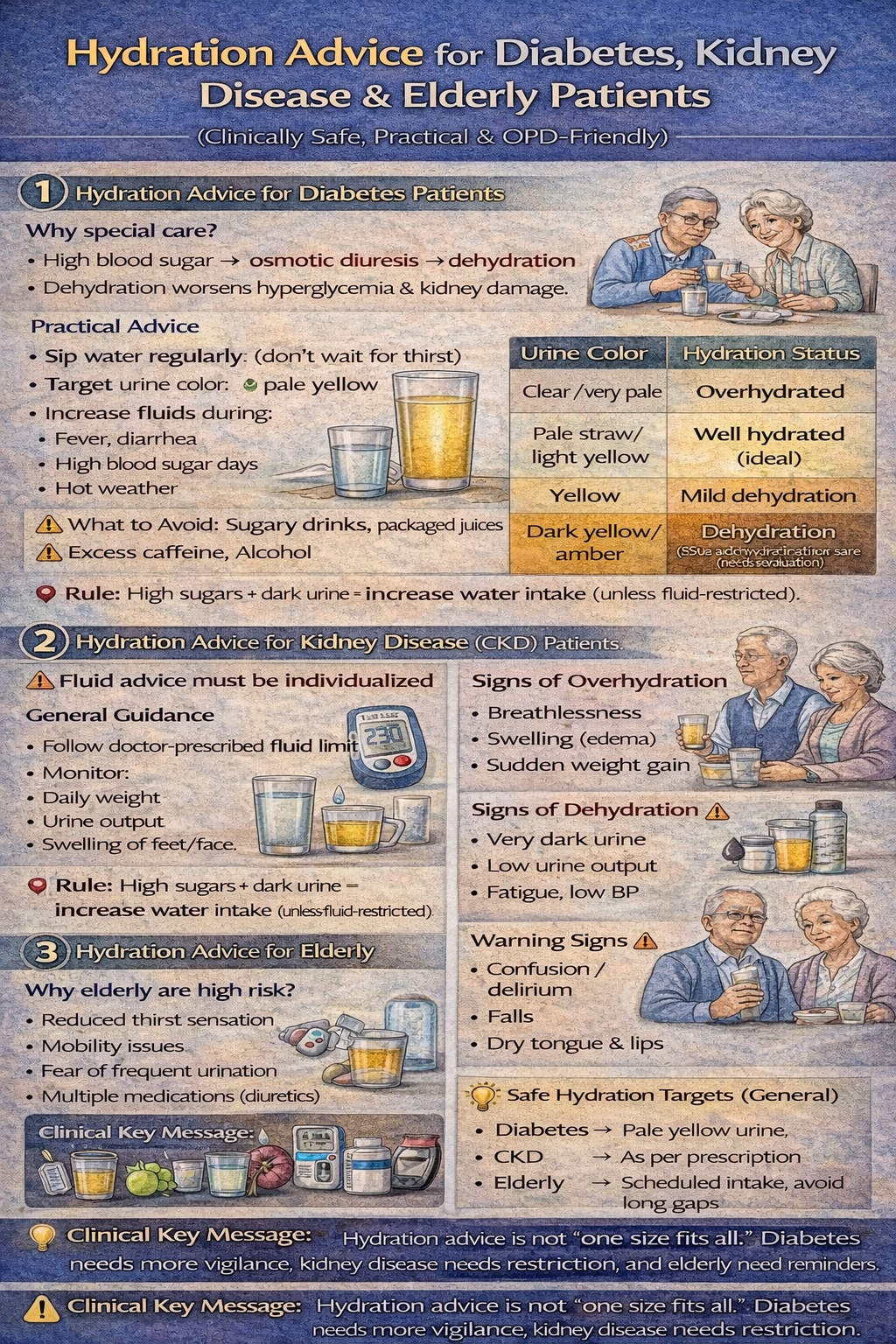
1️⃣ Hydration Advice for Diabetes Patients
Why special care?
- High blood sugar → osmotic diuresis → dehydration
- Dehydration worsens hyperglycemia & kidney damage
Practical Advice
- Sip water regularly (don’t wait for thirst)
- Target urine color: pale yellow
- Increase fluids during:
- Fever, diarrhea
- High blood sugar days
- Hot weather
What to Avoid
- Sugary drinks, packaged juices
- Excess caffeine
- Alcohol
Red Flags 🚨
- Dark urine + high sugars
- Dizziness, dry mouth
- Reduced urine output
Rule: High sugars + dark urine = increase water intake (unless fluid-restricted).
2️⃣ Hydration Advice for Kidney Disease (CKD) Patients
⚠️ Fluid advice must be individualized
General Guidance
- Follow doctor-prescribed fluid limit
- Monitor:
- Daily weight
- Urine output
- Swelling of feet/face
Signs of Overhydration 🚨
- Breathlessness
- Swelling (edema)
- Sudden weight gain
Signs of Dehydration 🚨
- Very dark urine
- Low urine output
- Fatigue, low BP
Tips
- Use small cups, sip slowly
- Spread fluid intake through the day
- Count all fluids (tea, soup, fruits)
Key rule: CKD patients should not blindly increase water intake.
3️⃣ Hydration Advice for Elderly Patients
Why elderly are high risk?
- Reduced thirst sensation
- Mobility issues
- Fear of frequent urination
- Multiple medications (diuretics)
Practical Advice
- Fixed drinking schedule (every 2–3 hours)
- Small frequent sips
- Include:
- Water
- Buttermilk
- Coconut water (if no restriction)
- Soups
Monitor Using
- Urine color chart
- Mental alertness
- Constipation & dizziness
Warning Signs 🚨
- Confusion / delirium
- Falls
- Dry tongue & lips
💡 Safe Hydration Targets (General)
| Group | Guidance |
|---|---|
| Diabetes | Pale yellow urine, frequent urination |
| CKD | As per prescription |
| Elderly | Scheduled intake, avoid long gaps |
🔑 Clinical Key Message
Hydration advice is not “one size fits all.” Diabetes needs more vigilance, kidney disease needs restriction, and elderly need reminders.