First signs of a heart attack & silent symptoms — what people often miss
Explained by cardiologist
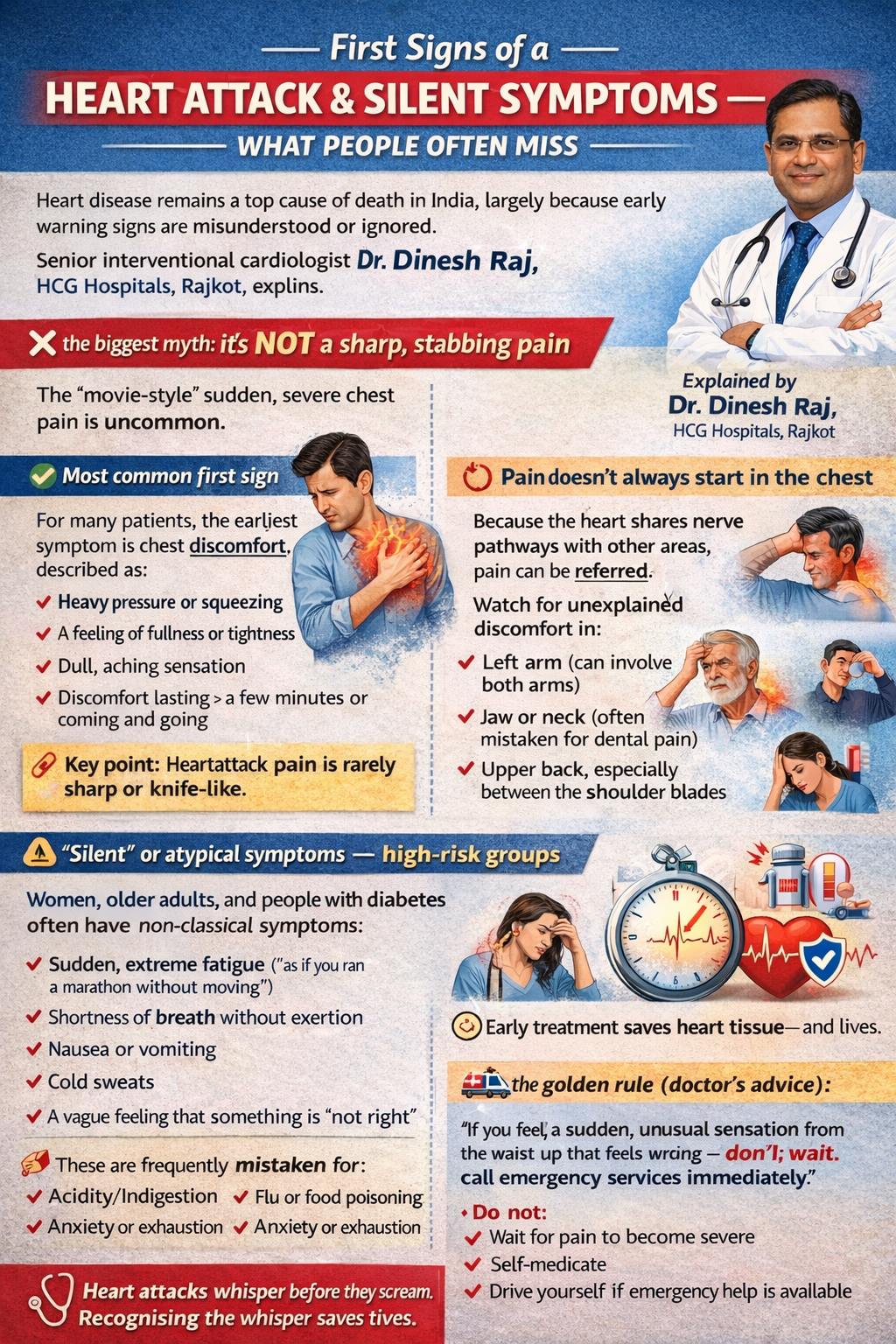
Heart disease remains a leading cause of death in India, largely because early warning signs are misunderstood or ignored. Senior interventional cardiologist Dr Dinesh Raj, HCG Hospitals, Rajkot, explains why the first sign of a heart attack is often subtle—not dramatic.
❌ The biggest myth: it’s not a sharp, stabbing pain
The “movie-style” sudden, severe chest pain is uncommon.
✅ Most common first sign
For many patients, the earliest symptom is chest discomfort, described as:
- Heavy pressure or squeezing
- A feeling of fullness or tightness
- Dull, aching sensation
- Discomfort lasting > a few minutes or coming and going
Key point: Heart attack pain is rarely sharp or knife-like.
🔄 Pain doesn’t always start in the chest
Because the heart shares nerve pathways with other areas, pain can be referred.
Watch for unexplained discomfort in:
- Left arm (can involve both arms)
- Jaw or neck (often mistaken for dental pain)
- Upper back, especially between the shoulder blades
👉 Many patients present first with arm, jaw, or back pain, not chest pain.
⚠️ “Silent” or atypical symptoms — high-risk groups
Women, older adults, and people with diabetes often have non-classical symptoms:
- Sudden, extreme fatigue (“as if you ran a marathon without moving”)
- Shortness of breath without exertion
- Nausea or vomiting
- Cold sweats
- A vague feeling that something is “not right”
These are frequently mistaken for:
- Acidity/indigestion
- Flu or food poisoning
- Anxiety or exhaustion
⏱️ Why early recognition is critical
In cardiology, the rule is simple: Time is muscle.
Delays mean:
- More heart muscle damage
- Higher risk of heart failure
- Lower survival and recovery
Early treatment saves heart tissue—and lives.
🚑 The golden rule (doctor’s advice)
“If you feel a sudden, unusual sensation from the waist up that feels wrong—don’t wait. Call emergency services immediately.”
Do not:
- Wait for pain to become severe
- Self-medicate
- Drive yourself if emergency help is available
🩺 Clinical takeaway (OPD / public awareness)
Heart attacks whisper before they scream. Recognising the whisper saves lives.